

How it works
Reasoning, examined fairly.
- 01
Paste a passage
Up to 5,000 characters, plus optional context about the source or audience.
- 02
We map the argument
A neutral summary, the main claim, and the reasons offered for it.
- 03
Lizards are flagged
Possible reasoning problems, each tied to an exact excerpt from your text.
- 04
Build it stronger
Missing context, alternative readings, and ways to improve the case without changing its position.
Assessment labels
These describe how strong the reasoning assessment is — not statistical certainty.
- Clear pattern
- The pattern is evident from the text itself.
- Possible pattern
- The pattern is plausible, but reasonable readers could disagree.
- Needs context
- Whether it applies depends on information not in the passage.
What it doesn't do
- It is not a fact-checker. It flags claims that need evidence but does not verify them.
- It judges reasoning, never a speaker's character, intentions, or intelligence.
- It applies the same standards to every party, ideology, and belief.
- Strong emotion, disagreement, or an unpopular view is not automatically a fallacy.
- It's an AI tool and can be wrong. Treat results as prompts for thinking, not verdicts.
Meet the Logic Lizards
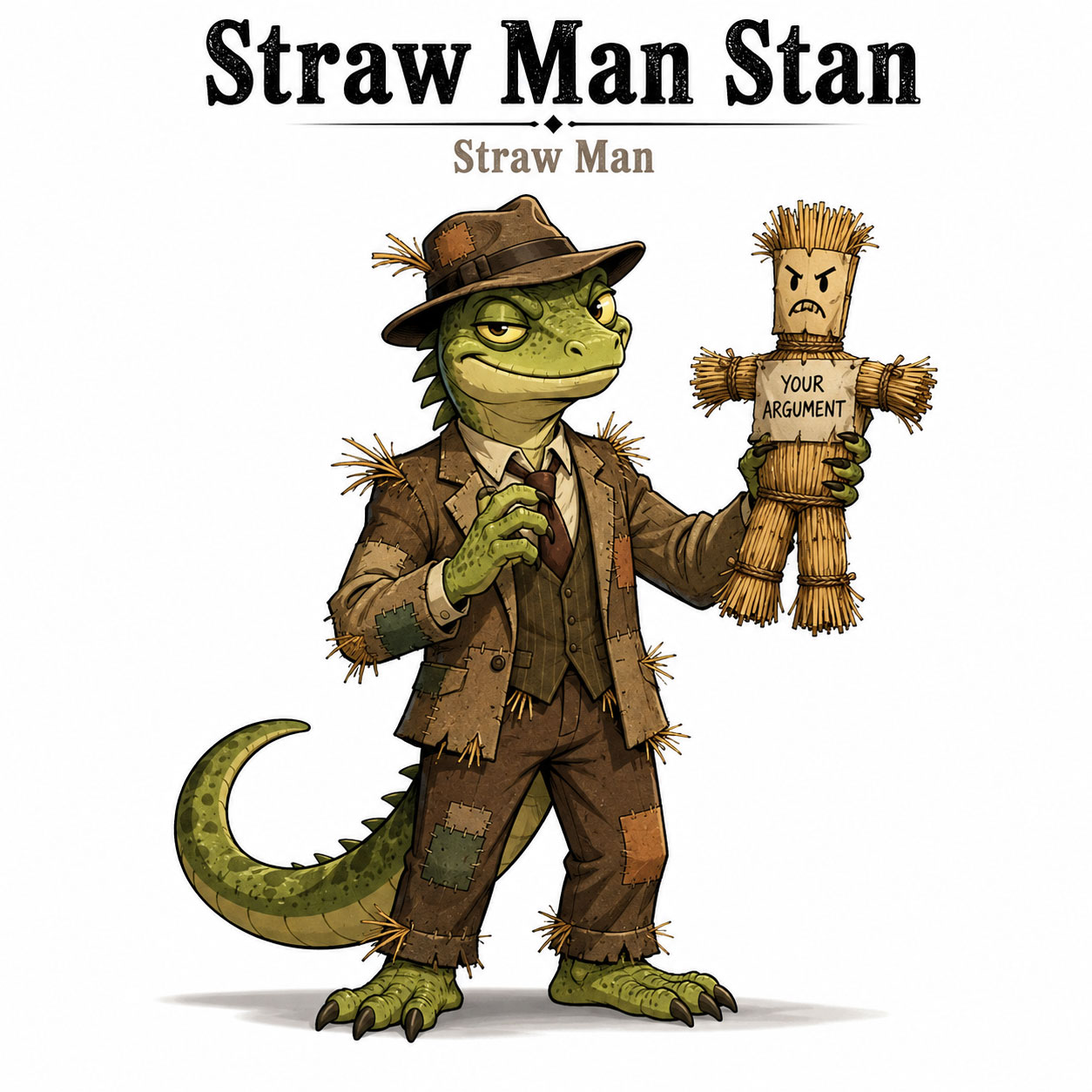
Straw Man Stan
Straw man
Misrepresents an argument before attacking it.
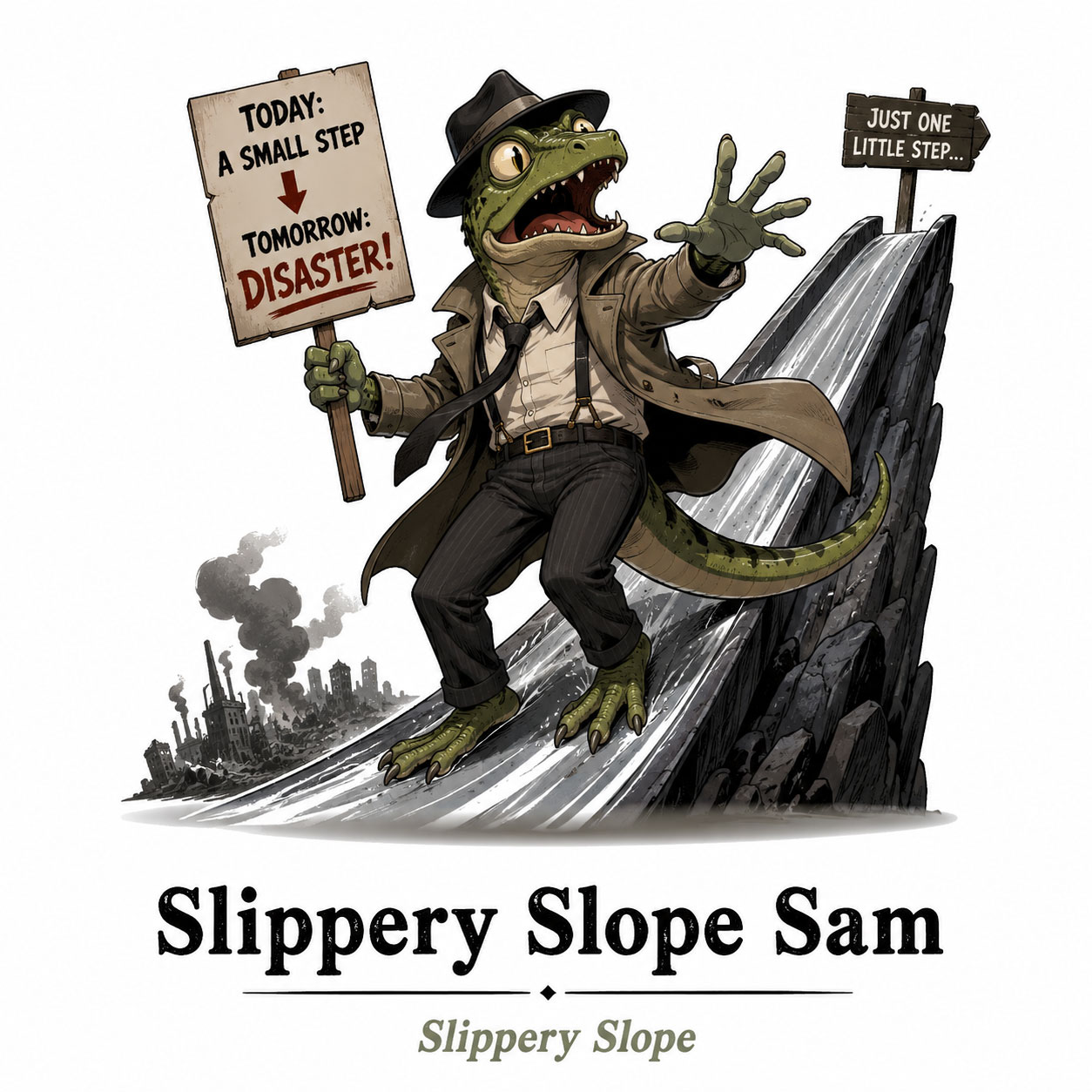
Slippery-Slope Sam
Slippery slope
Assumes an escalating chain of consequences without adequate support.

Red-Herring Hank
Red herring
Diverts attention to an irrelevant issue.
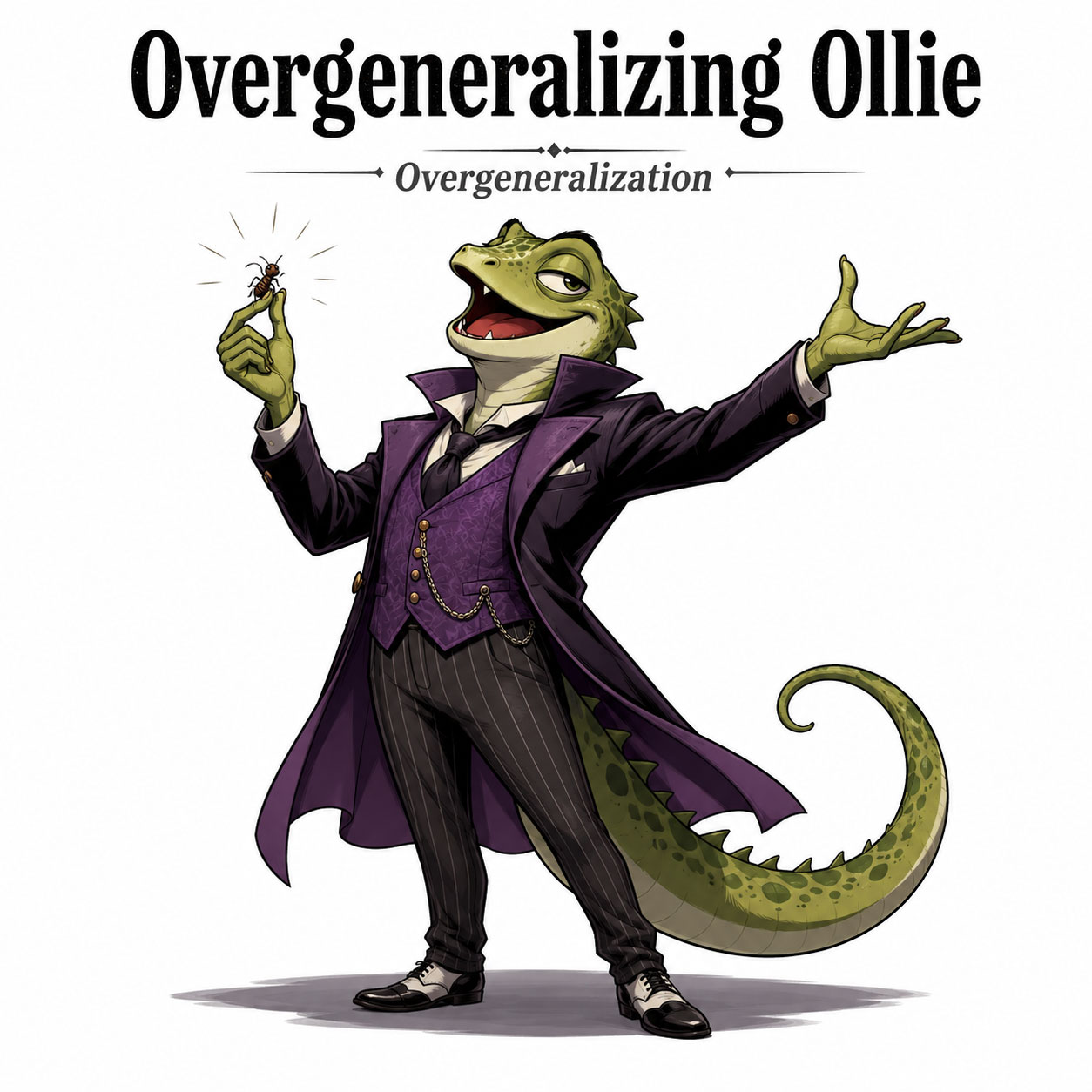
Overgeneralizing Ollie
Overgeneralization
Makes a claim broader than the evidence supports.

Hasty Harry
Hasty generalization
Draws a conclusion from too little or unrepresentative evidence.
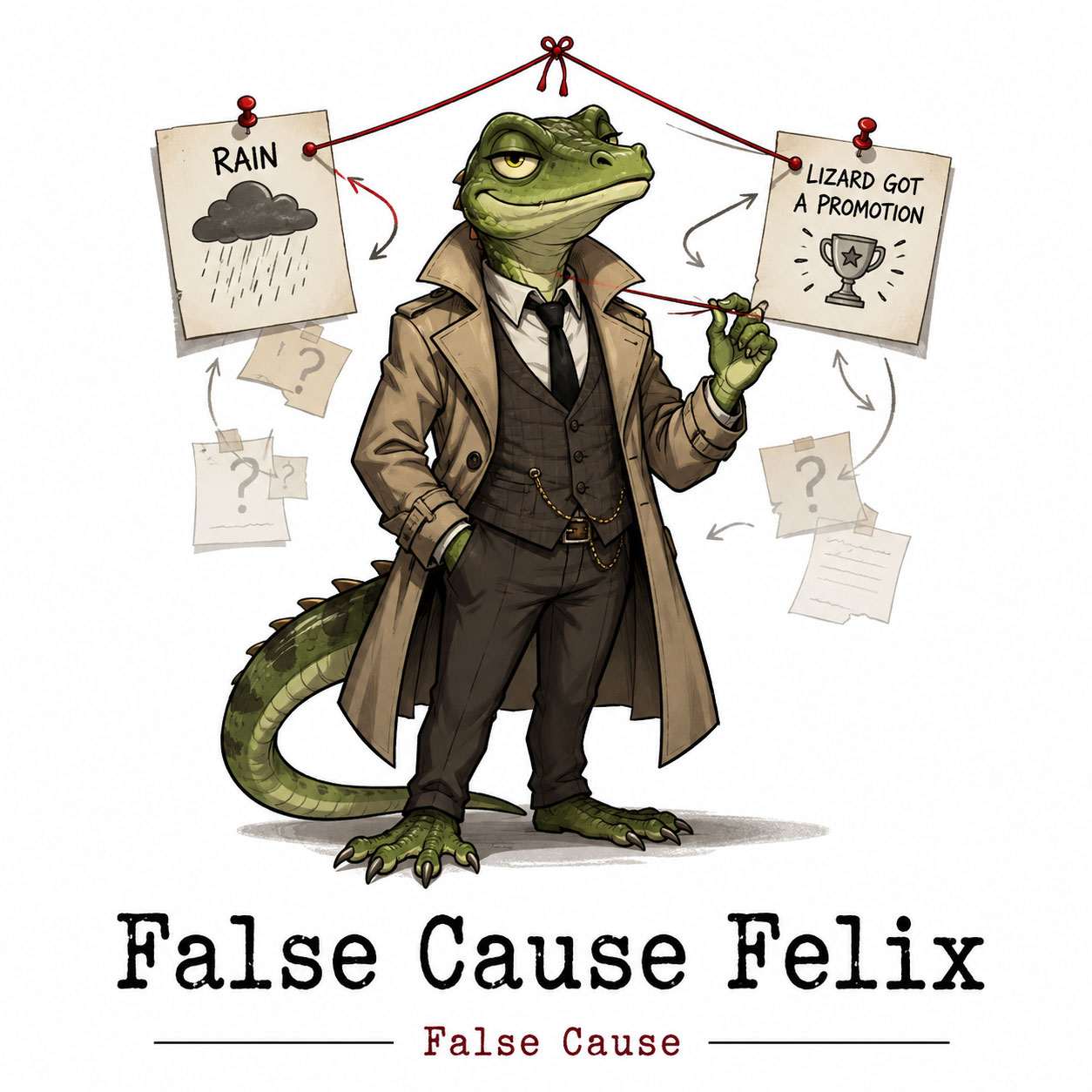
False-Cause Felix
False cause
Assumes a causal relationship without adequate support.
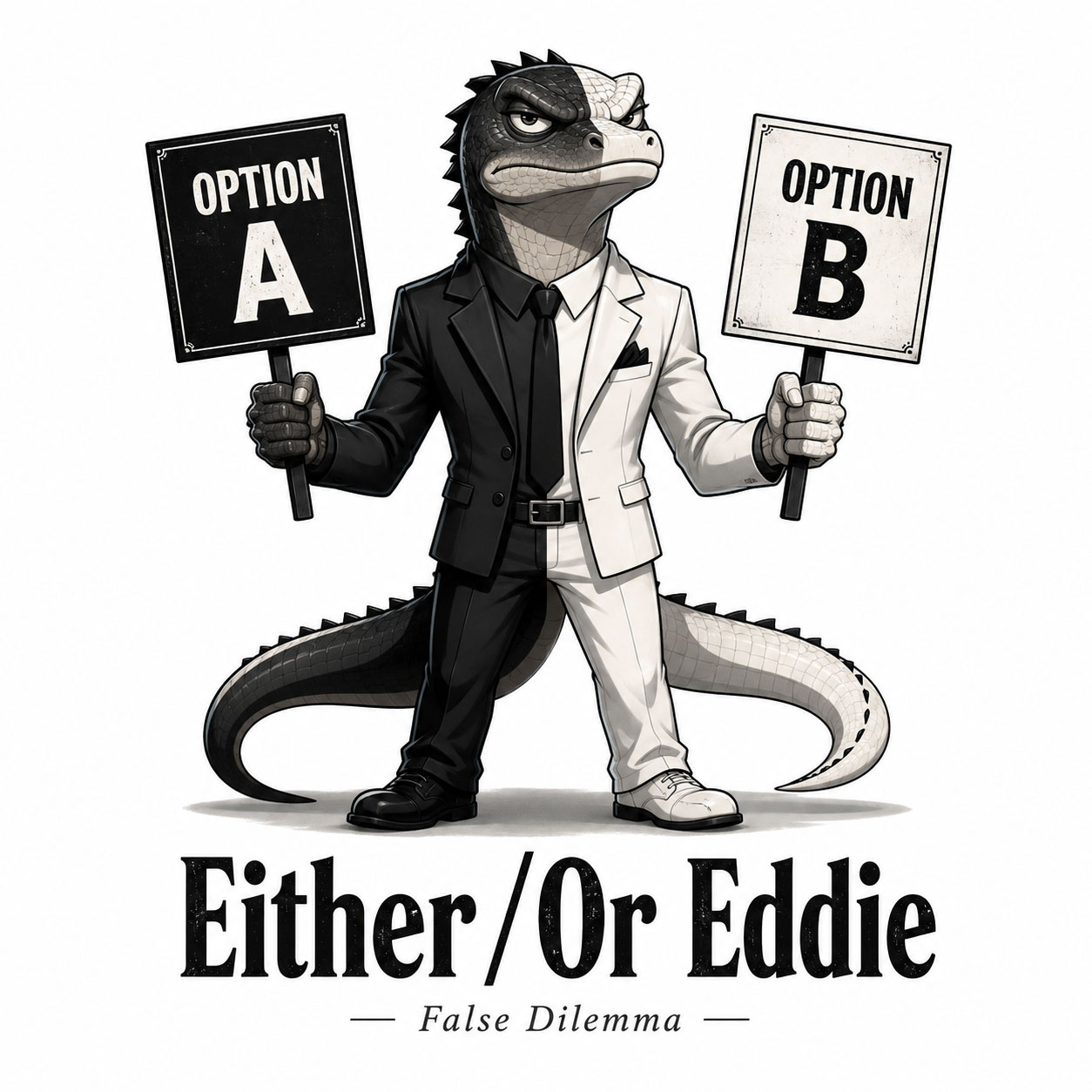
Either-Or Eddie
False dilemma
Presents too few options when other meaningful possibilities exist.

Circular Sally
Circular reasoning
Uses the conclusion itself as support.

Bandwagon Brenda
Appeal to popularity
Treats popularity as proof.

Ad Hominem Hannah
Ad hominem
Attacks a person instead of addressing the argument.